
Role & Responsibilities
AI-led product design, product strategy, workflow design, insight generation, UX research, and cross-functional collaboration.
My contribution
Designed AI-powered workflows for feedback summarization, pattern detection, insight generation, and product opportunity discovery. I also worked on how these insights could connect with roadmap and product planning workflows.
Discipline
Product design, AI UX design, research synthesis, product strategy, and SaaS workflow design.
Team structure
Product manager · 4 engineers
Zeda.io had a large volume of customer feedback spread across conversations, documents, support notes, and product inputs. Product teams had more feedback than they could reliably synthesize. I worked on AI-powered insights that helped teams analyze feedback, surface themes, and support roadmap planning.
Overview
Turning scattered feedback into product intelligence
Zeda.io collected feedback from multiple sources, but product teams still had to manually review, group, and interpret large volumes of information. Scattered feedback made recurring customer needs harder to see and prioritize.
The goal was to use AI to help product teams move faster from raw feedback to meaningful insights. By summarizing feedback, identifying patterns, and surfacing product opportunities, the system helped teams make more informed product decisions.
The challenge
Making feedback analysis faster and more actionable
Product teams were spending too much time reading feedback manually and trying to connect signals across different sources. Valuable insights were often hidden inside long conversations, scattered notes, and disconnected customer inputs.
AI needed to reduce manual work without taking decisions away from teams. The experience had to highlight important patterns and help teams translate feedback into clear product actions.

Manual feedback analysis
Teams had to read and interpret large volumes of customer feedback manually, which slowed down product discovery.

Missed product signals
Important patterns and recurring customer needs were easy to miss because feedback was spread across different sources.

Slow prioritization
Without structured insights, teams needed more time to connect feedback with product goals, roadmap items, and feature decisions.
Research
Identifying gaps in feedback and insight workflows
I analyzed how product teams collected, reviewed, and used customer feedback inside Zeda.io. The goal was to understand where the workflow slowed down and where AI could provide meaningful support.
The research showed that teams did not need AI to replace product thinking. AI had to reduce manual reading so teams could focus on decisions.
Key metrics
75%
Product feedback required manual review before it could be used for product planning.
60%
Teams found it difficult to identify recurring themes across multiple feedback sources.
80%
Product decisions were delayed because insights were not easy to extract from raw feedback.
Key insights

Feedback was spread across conversations, documents, support notes, and customer inputs.
Teams spent significant time manually grouping similar feedback and identifying patterns.
Product managers needed a faster way to connect feedback with opportunities, features, and roadmap priorities.
AI could help summarize, classify, and surface insights, but the final product decision still needed to stay with the team.
Design response
Designing AI workflows for product discovery
The experience had to make AI useful inside existing discovery workflows. Instead of creating a standalone AI feature, I designed capabilities that supported existing product discovery and planning tasks.
The experience focused on summarizing feedback, identifying themes, surfacing opportunities, and helping teams move from insight to action with more confidence.
Key features
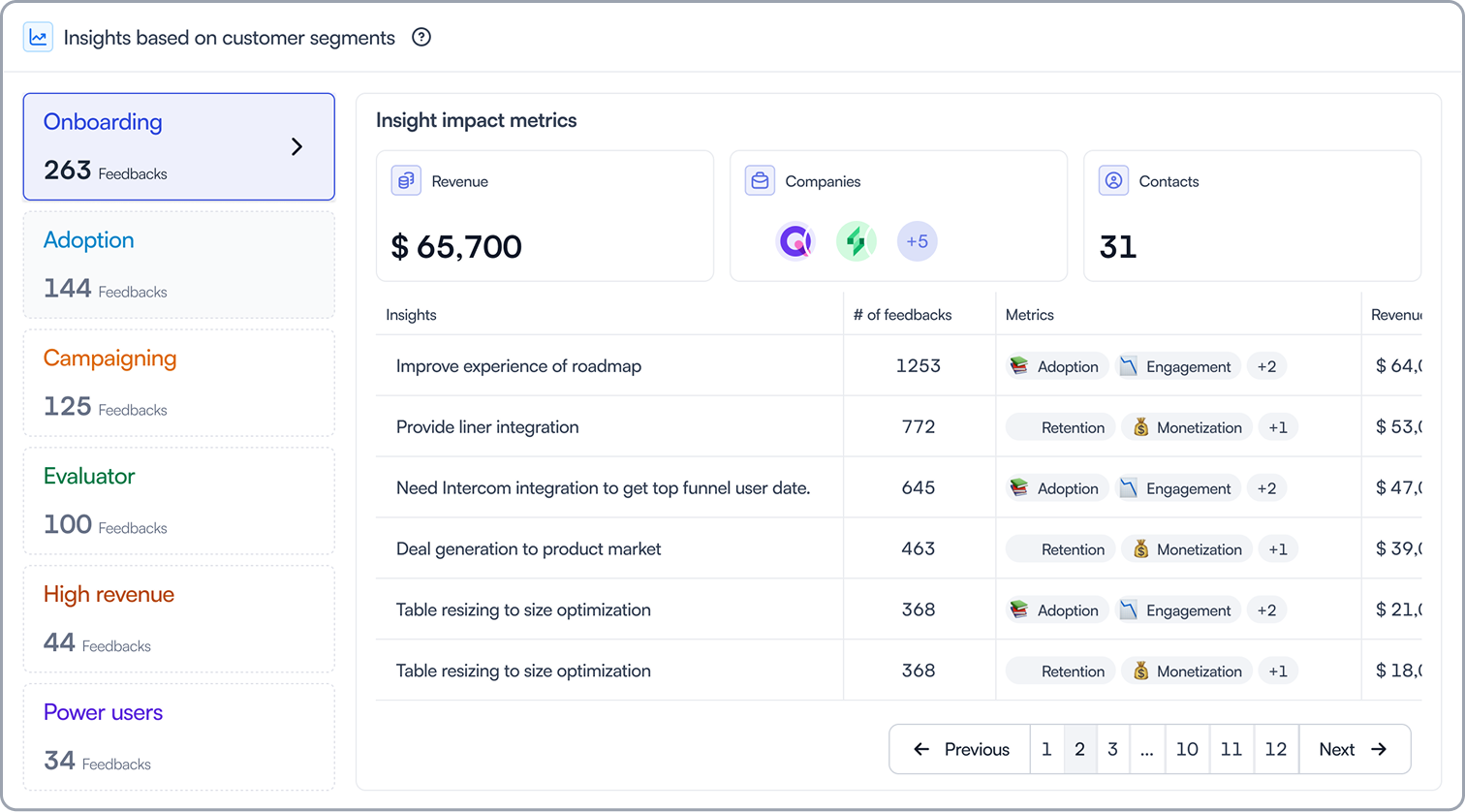
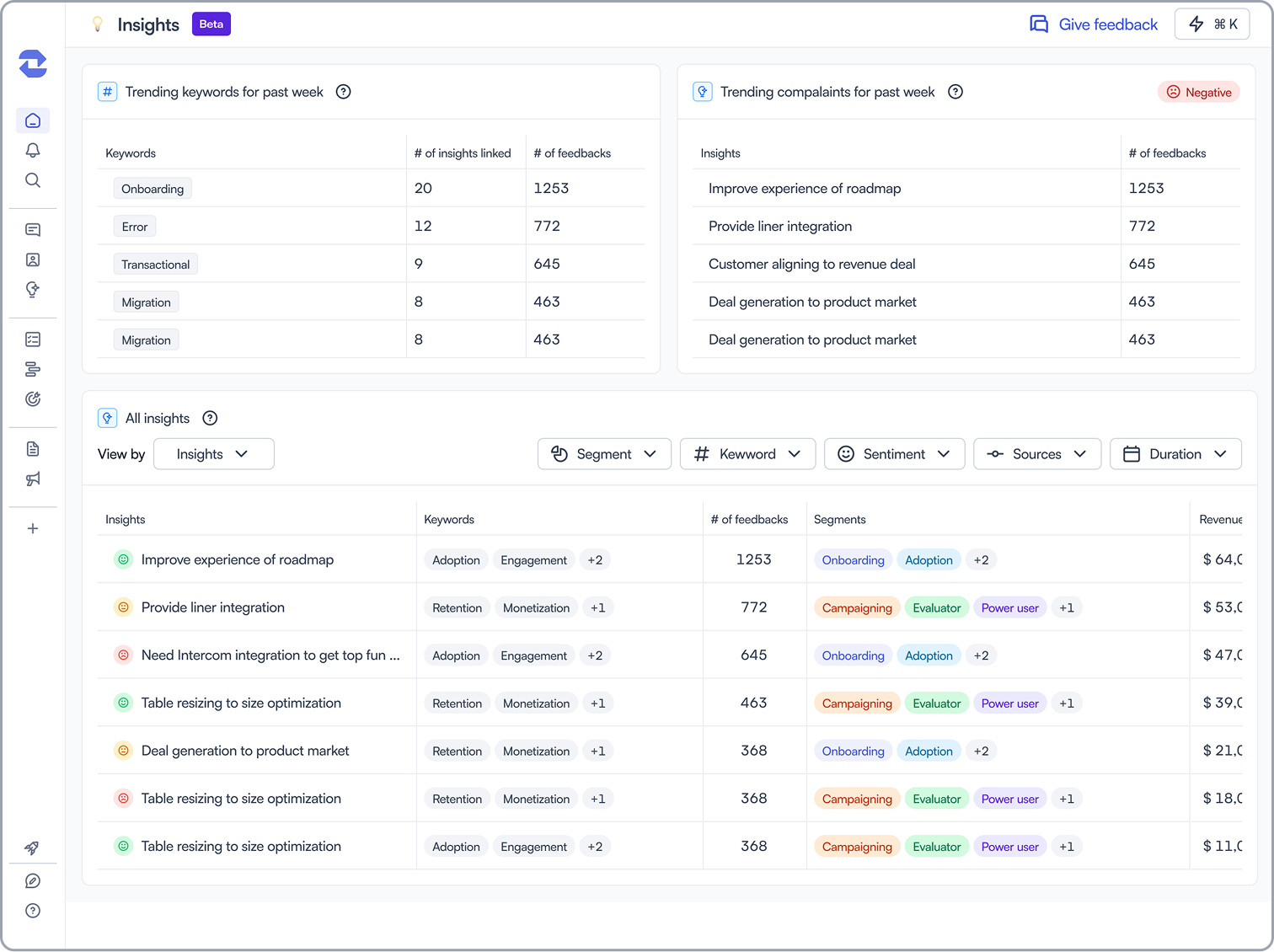
AI-powered insight generation
AI helped summarize large volumes of feedback into clear themes and opportunity areas. This allowed product teams to understand what customers were asking for without manually reading every input.
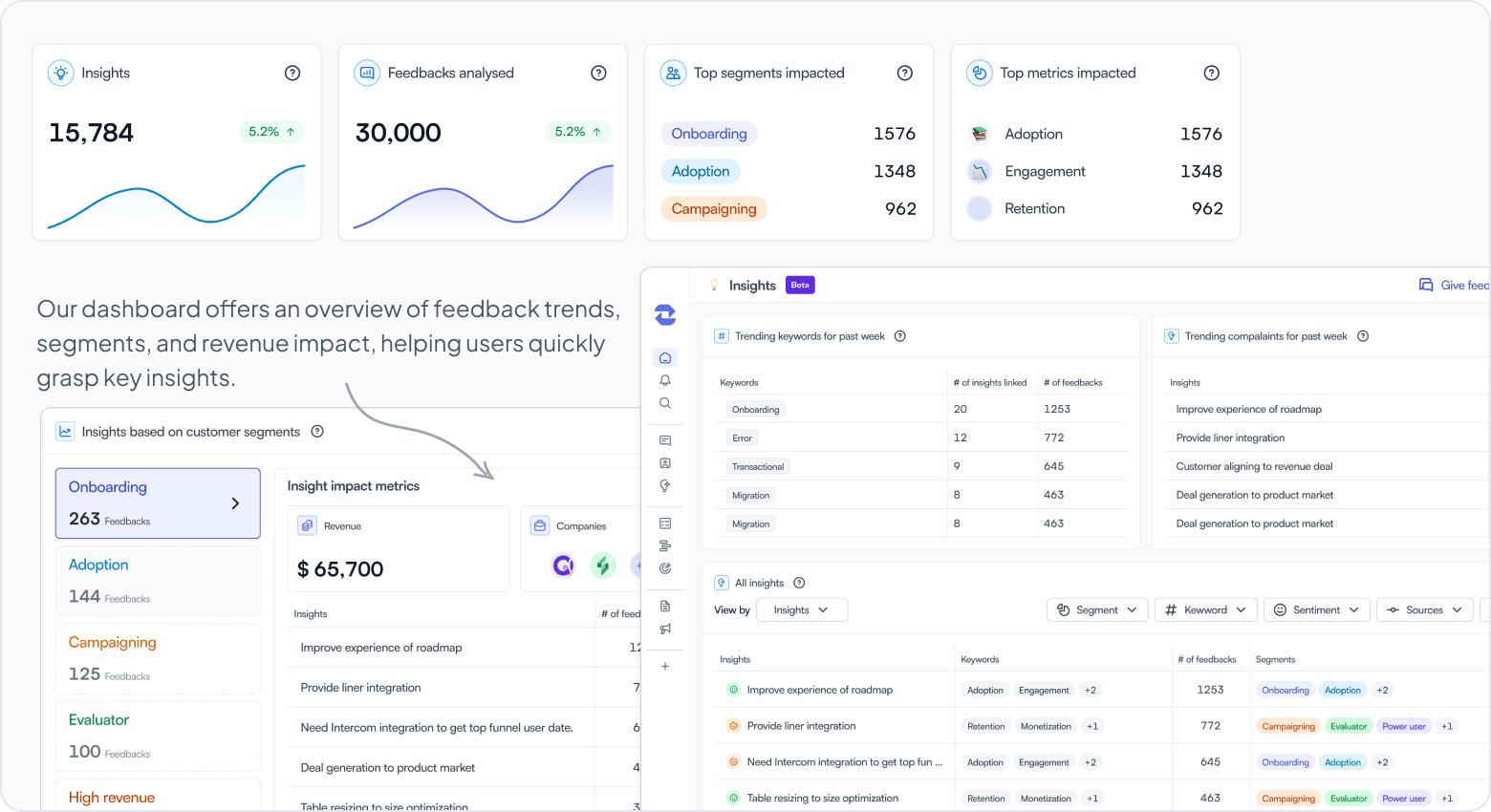
Benefit: Helped teams quickly identify recurring customer needs and product opportunities.
Feedback analysis
The system grouped related feedback and highlighted common patterns across customer inputs. This helped product teams see which problems appeared repeatedly and where user demand was strongest.
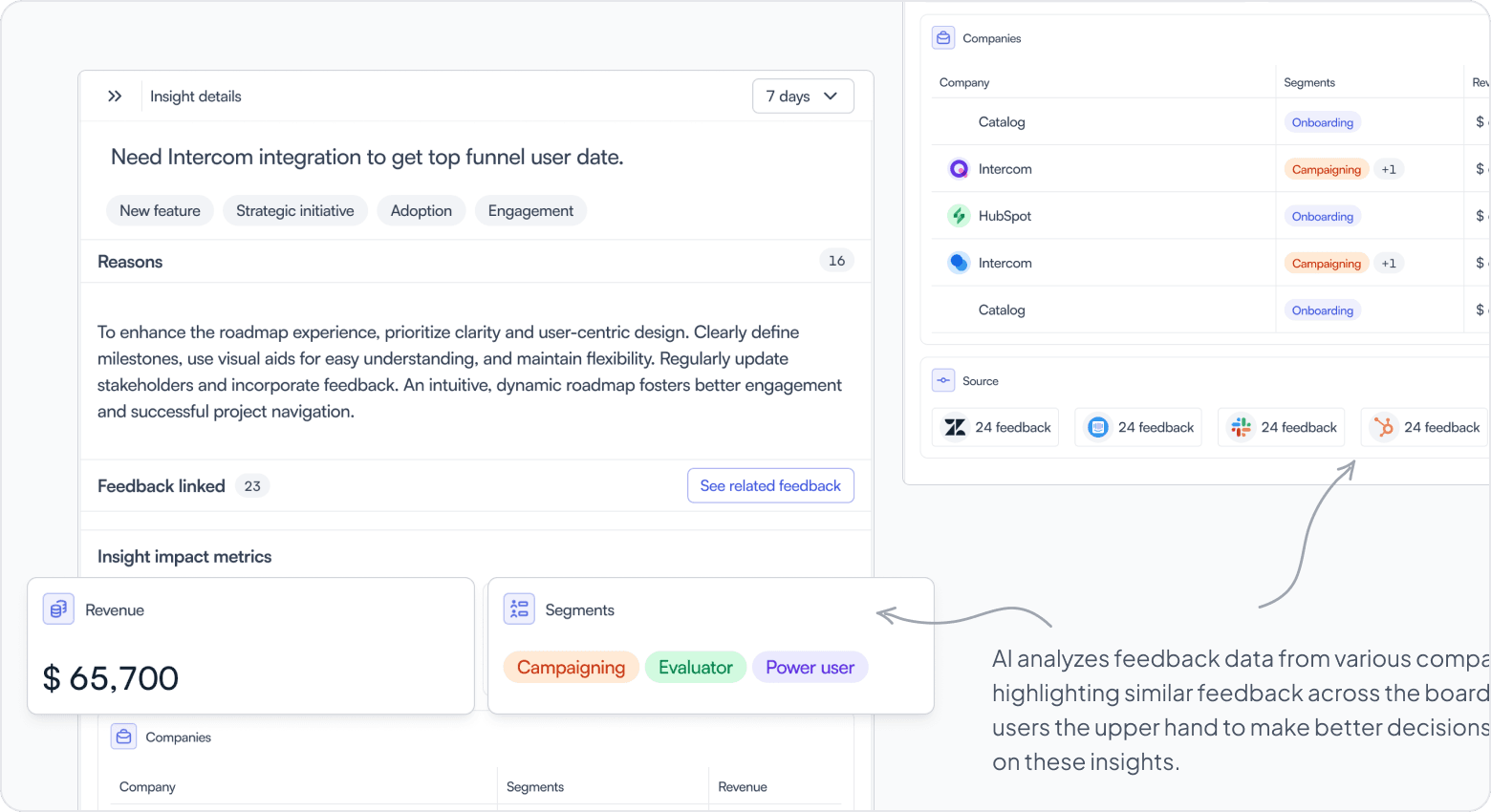
Benefit: Reduced manual effort and made feedback review faster and more structured.
Opportunity discovery
AI surfaced potential opportunity areas based on feedback patterns, customer needs, and product context. This helped teams connect raw feedback with possible product improvements.
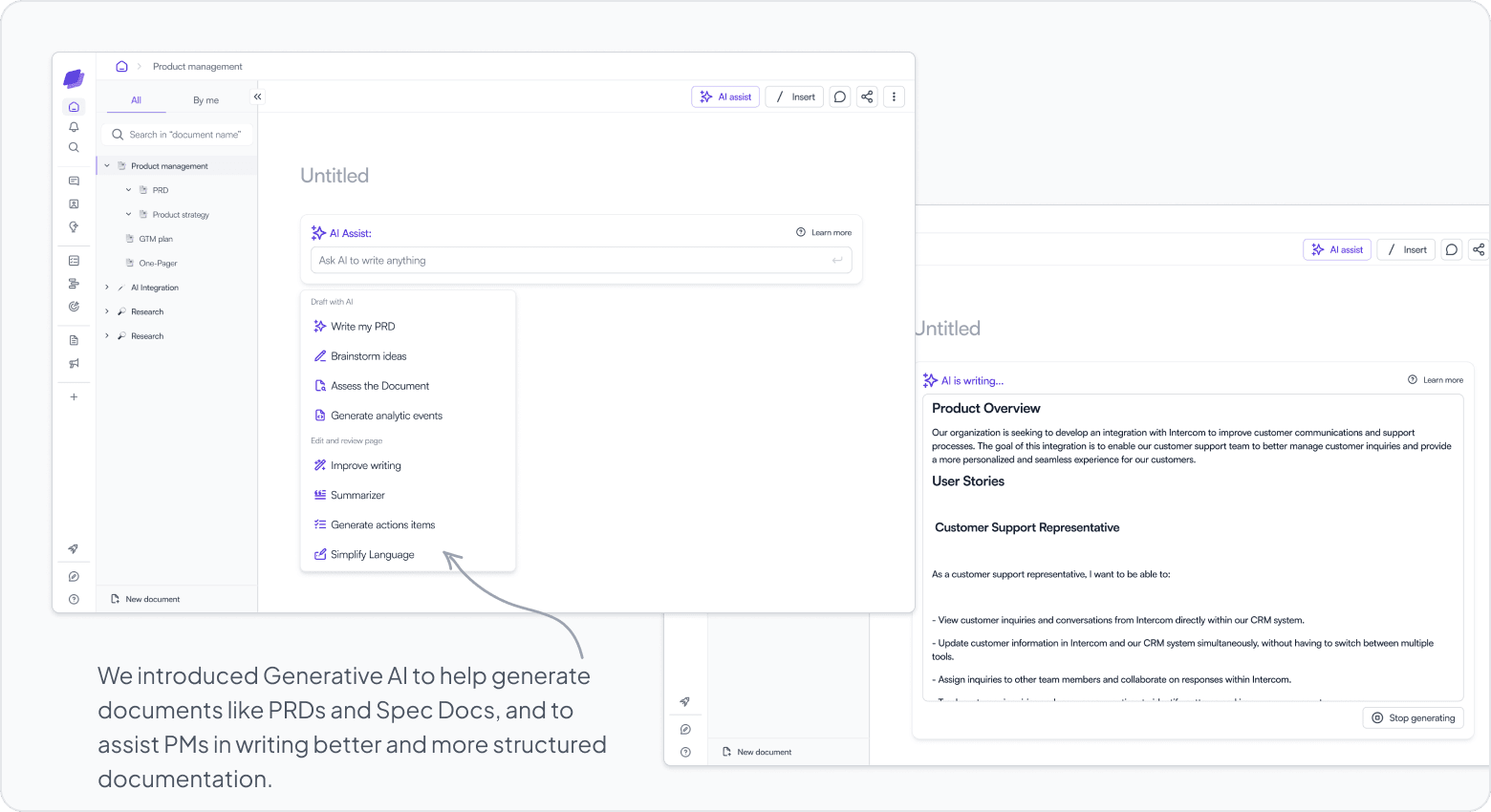
Benefit: Helped teams move from scattered feedback to clearer product opportunities.
Release note generation
AI helped generate release note drafts from completed product updates. This reduced the effort needed to communicate product changes clearly to customers and internal teams.
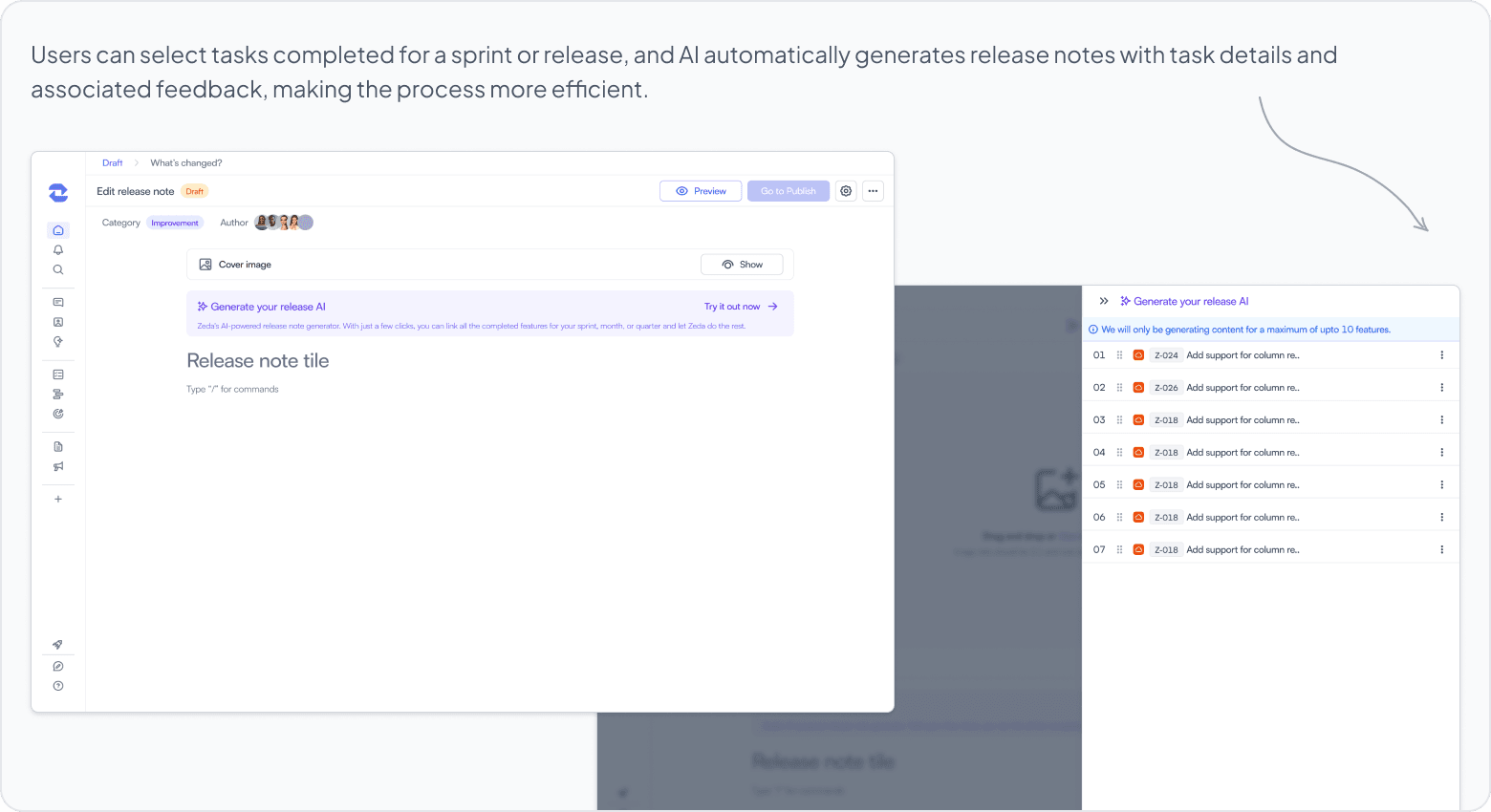
Benefit: Improved communication speed and made release updates easier to create.
Outcomes
Structured AI summaries helped teams move from reading feedback to making decisions.
25%
Reduction in time spent on analysis
AI-assisted summaries reduced the time needed to review and interpret large volumes of feedback.
40%
Faster product discovery
Product teams were able to identify themes and opportunities faster with AI-supported workflows.
30%
Improvement in insight clarity
Structured summaries and themes helped teams understand customer needs more clearly.
25%
Faster release note creation
AI-generated drafts helped reduce the effort needed to create release communication.
Learnings
Trust grew when teams could understand where each AI insight came from.

AI should support decision-making, not replace it
AI helped reduce manual work, but users still needed control over interpretation, prioritization, and final product decisions.
Context makes AI more useful
AI outputs became more valuable when they were connected to product areas, customer feedback, and roadmap context.
Trust is built through clarity
Users needed to understand where AI insights came from and how they could be used before relying on them.
AI works best inside existing workflows
The experience became more useful when AI was integrated into feedback, discovery, and roadmap workflows instead of being treated as a separate feature.