
Role & Responsibilities
Led the design of Halodoc’s women’s health tracking experience, focusing on cycle tracking, reminders, symptoms, health insights, content, medicines, and doctor consultation pathways.
My contribution
Designed the cycle tracking journey, smart reminders, symptom and medicine tracking flows, personalized insight patterns, and care pathways that connected users to articles, medicines, and doctor consultations.
Discipline
Healthcare UX, women’s health, mobile app design, habit tracking, content discovery, and product design.
Team structure
Worked with product managers, engineers, healthcare stakeholders, content teams, and medical experts to create a connected women’s health experience inside Halodoc.
Halodoc wanted to support women with more personalized health tracking around menstrual cycles, symptoms, medicines, articles, and doctor consultations. Basic cycle tracking was not enough without guidance, reminders, and care access.
Overview
Supporting women with personalized health tracking
Women needed a simple way to track cycles, understand symptoms, receive timely reminders, and access reliable health support. Health tracking became more useful when connected to clear next steps.
The challenge
Turning health tracking into actionable support
Basic cycle tracking alone was not enough. Users needed guidance, reminders, education, and access to care when they had concerns. Support had to feel personal without becoming overwhelming or clinical.

Medication and cycle tracking
Users needed a clear way to track medicines, symptoms, and cycle phases together.

Timely reminders
The app needed to support reminders for periods, pills, symptoms, and health actions.

Access to care
Users needed a direct path to doctors, articles, and medicines when they needed support.
Insights
Synthesizing women’s health needs
The insights showed that users wanted more than a calendar view. They wanted reminders, understanding, and guidance toward useful next steps.
Key insights

Users needed reminders for cycle dates, pills, and health-related actions.
Health tracking became more useful when connected to articles, medicines, and consultations.
Personalized insights helped users feel more supported and informed.
Users needed a simple flow that did not feel medical-heavy or overwhelming.
Design response
Designing a connected women’s health journey
The tracker had to become part of a broader care journey. Instead of treating it as a standalone tool, I connected tracking, reminders, education, and care access into one experience.
Key features
Instant onboarding for personalized tracking
We introduced a simple onboarding flow where users could enter their last period date, cycle duration, symptoms, and primary goal. A thoughtful setup helped users receive useful insights from the first interaction. Halodoc could personalize predictions and reminders around each user's needs without making setup feel clinical or heavy.
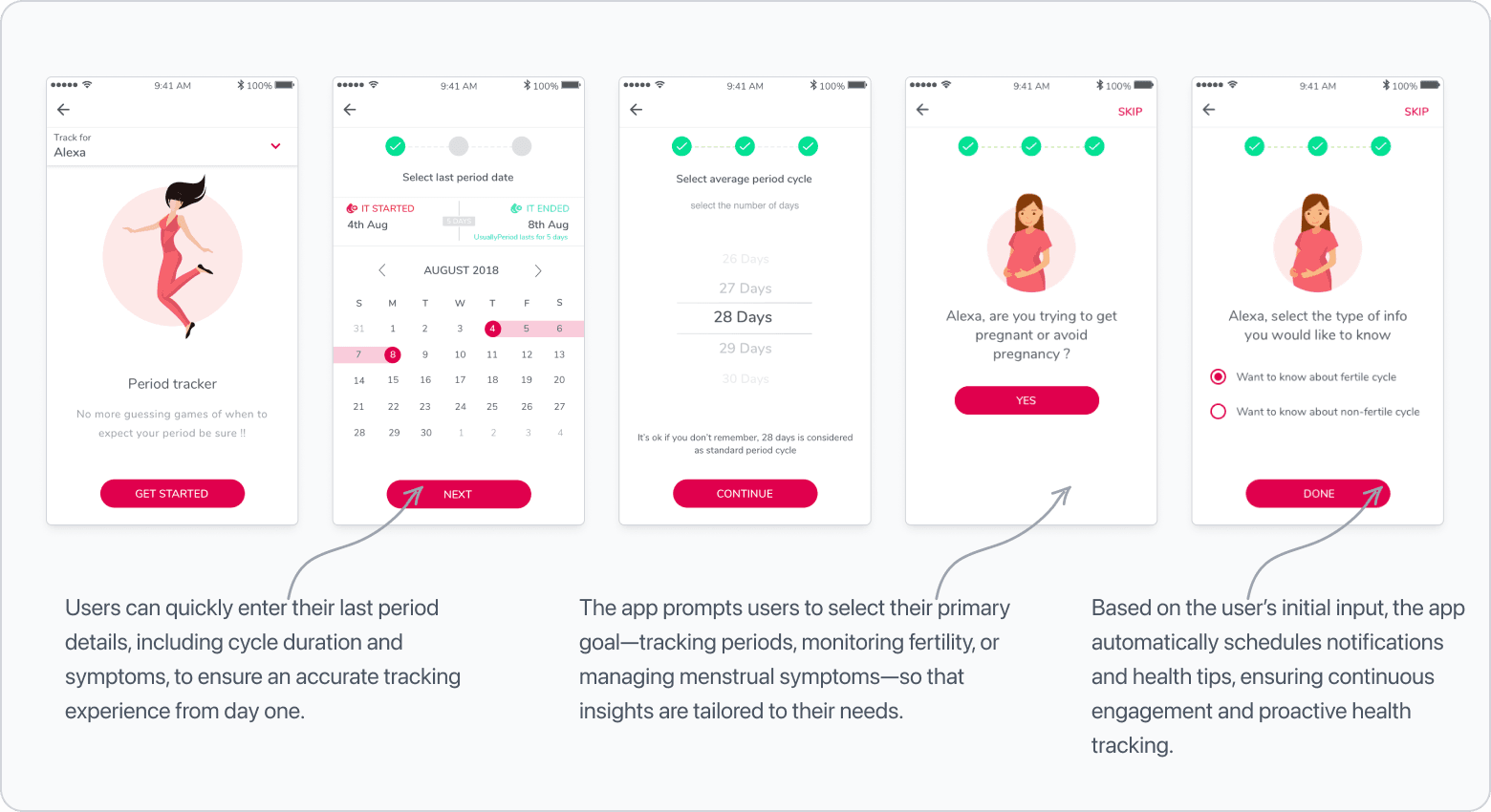
Benefit: A streamlined onboarding experience improves accuracy and ensures users receive meaningful insights from their first interaction.
Cycle stage scanner for clear visual tracking
We used a color-coded calendar to make different cycle phases easier to recognize, including menstruation, ovulation, fertility windows, and upcoming period dates. Clear cycle visualization helped users understand patterns without extra effort. The visual structure helped users anticipate changes and understand their bodies with less guesswork.
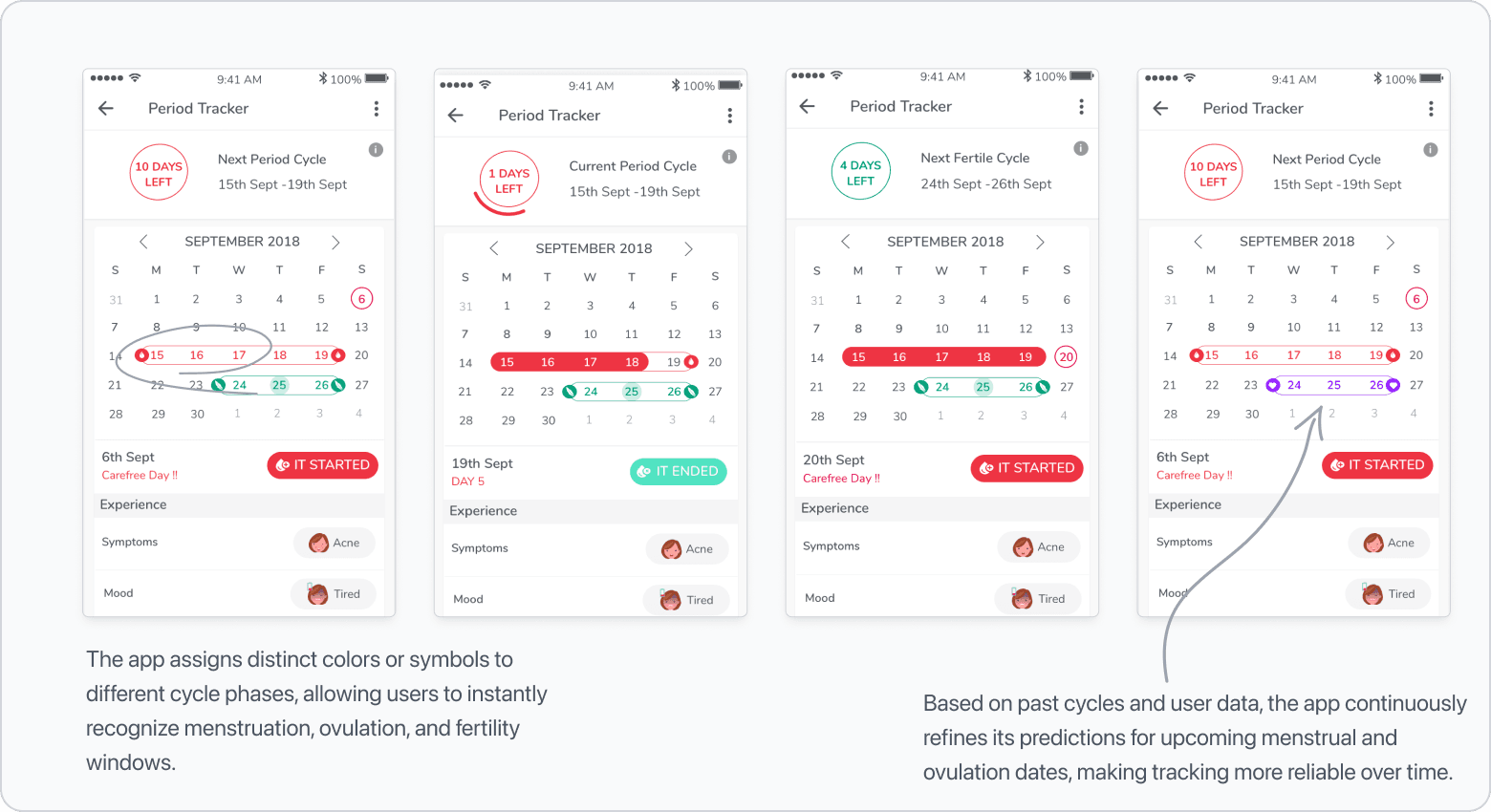
Benefit: Clear cycle visualization helps users track their health effortlessly, reducing uncertainty about their menstrual patterns.
Smart engagement through period insights
The app sent reminders for logging symptoms, upcoming periods, ovulation, pills, and other health-related actions. Timely reminders made tracking feel supportive instead of easy to forget. These nudges helped users stay consistent while receiving cycle-specific tips and explanations for their current phase.
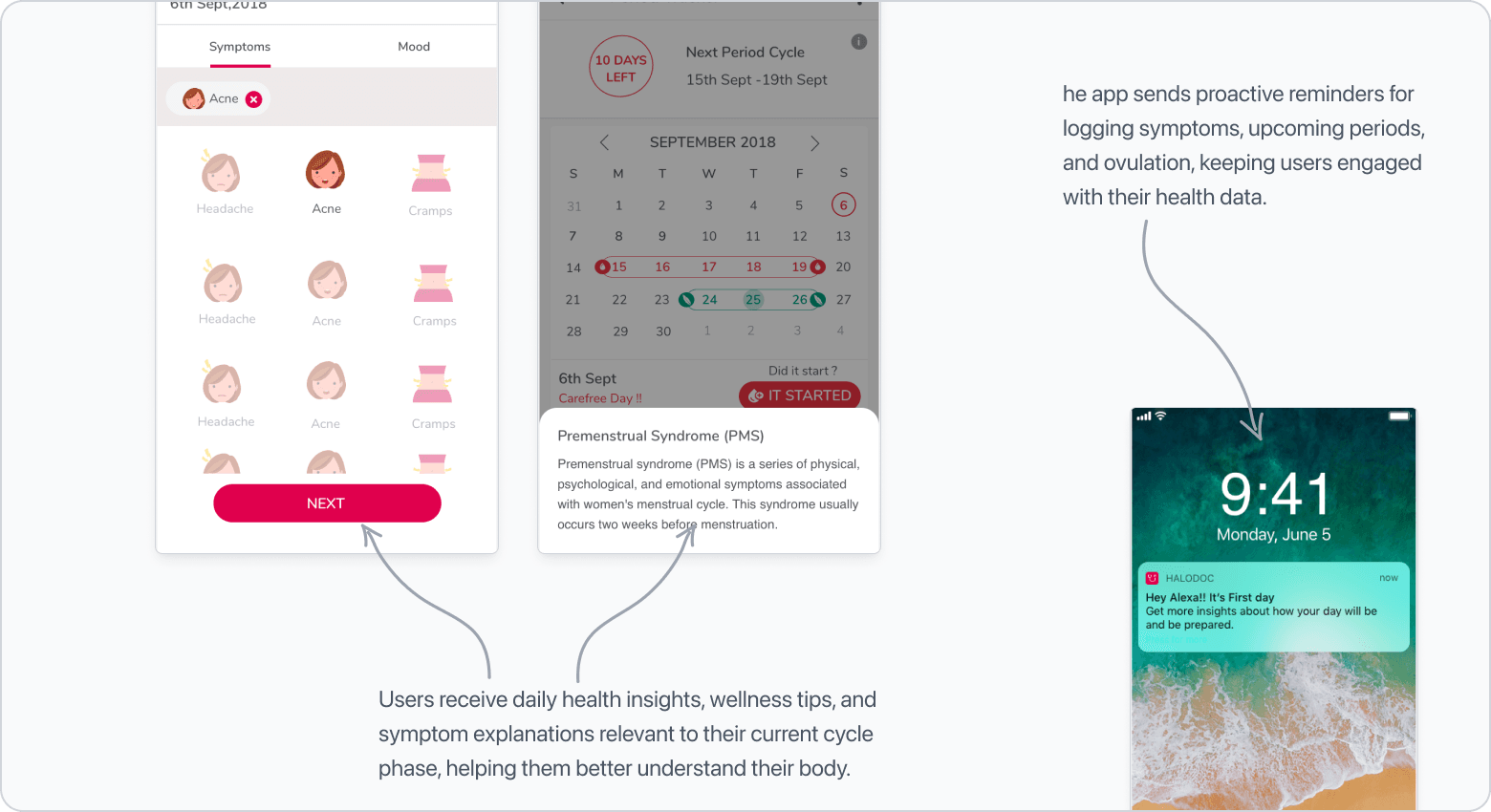
Benefit: Personalized reminders encourage regular tracking and help users understand changes in their cycle over time.
Well-being hub for comprehensive health support
We connected cycle tracking with articles, suggested products, and doctor consultation pathways. Instead of leaving users with data alone, Tracking became more meaningful when users could move from insight to care. The experience helped them explore trusted information, manage symptoms, and get medical support when needed.
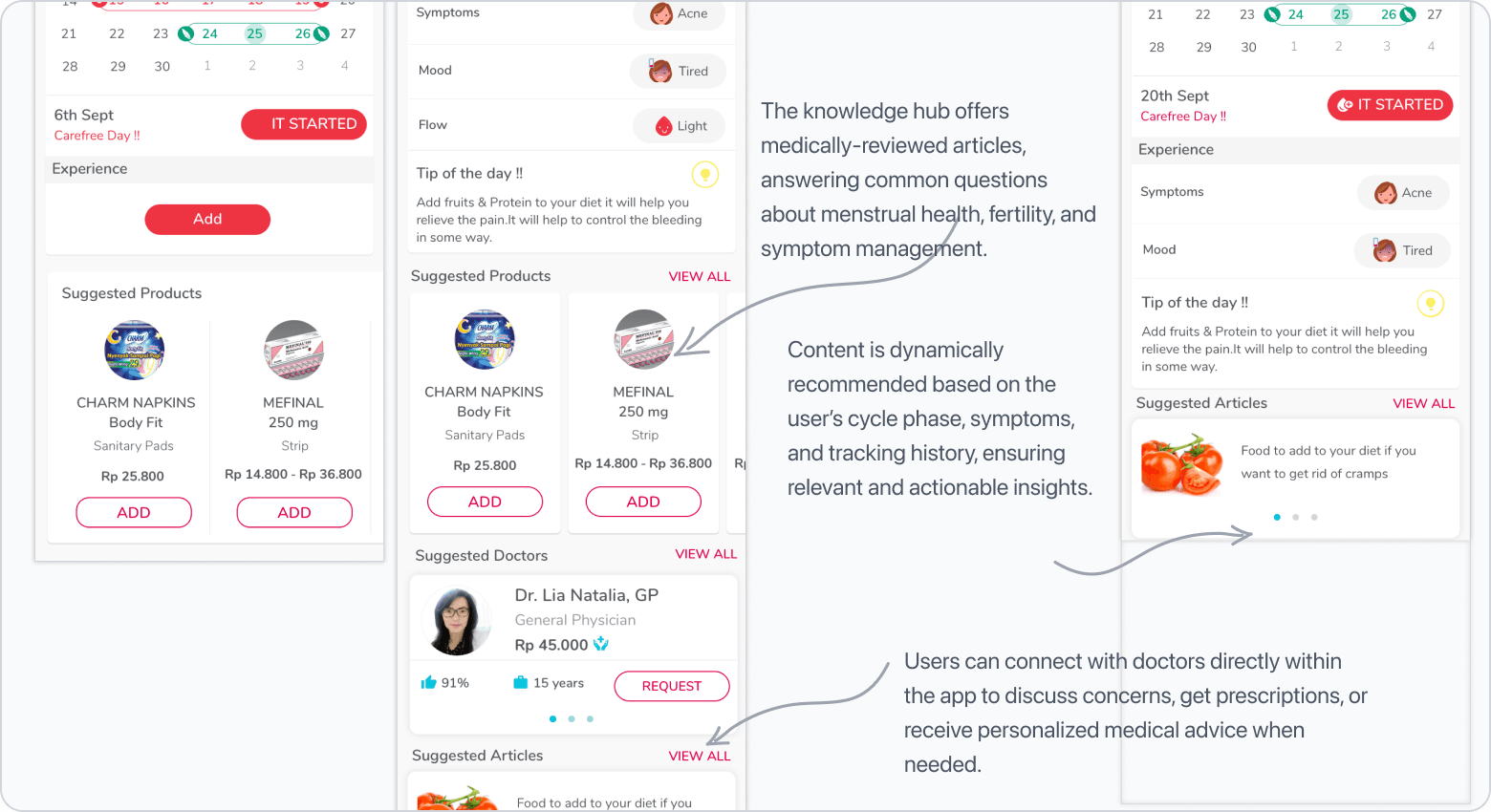
Benefit: The platform empowers users with knowledge, allowing them to make informed decisions about their reproductive health.
Outcomes
Connecting tracking to care discovery made the experience more actionable.
35%
Higher engagement in cycle tracking
Personalized tracking helped more users return and continue using the feature.
40%
Increase in care discovery
Connecting tracking with articles, medicines, and doctors helped users explore more health support options.
30%
Improved reminder usage
Smart reminders helped users stay consistent with health-related actions.
32%
Better access to care
Users had clearer paths from tracking insights to consultation and medicine support.
Learnings
Sensitive health flows need to feel private, supportive, and easy to understand.

Personalization increases relevance
Health tracking becomes more useful when insights and reminders are connected to user context.
Support should be actionable
Users need clear next steps, not just data about their cycle.
Sensitive health flows need trust
Women’s health experiences must feel private, supportive, and easy to understand.
Healthcare journeys are connected
Tracking, education, medicines, and consultations work better when they are part of one flow.