Role & Responsibilities
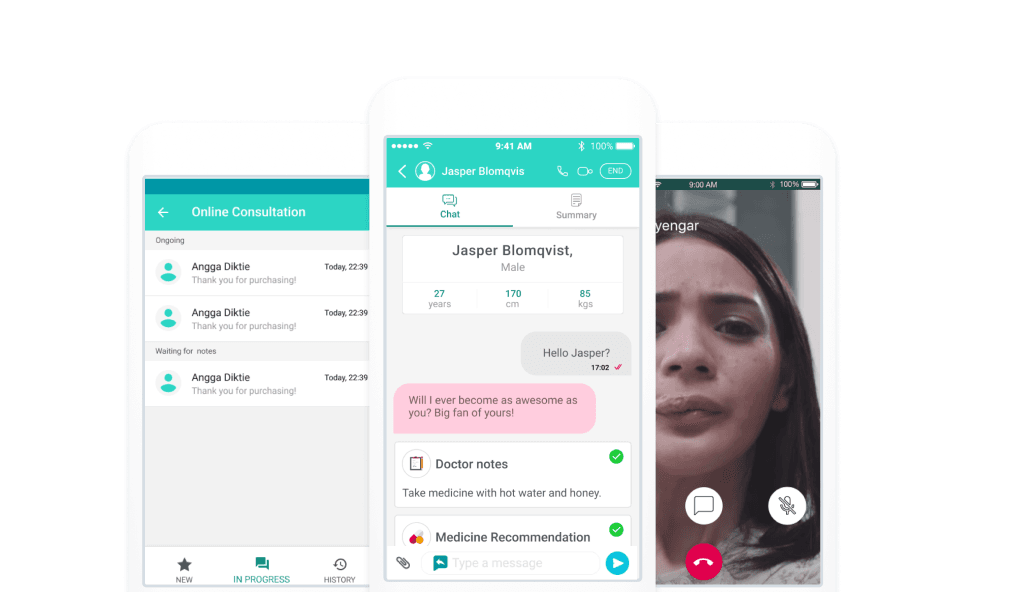
Led the doctor app experience design for teleconsultation workflows, focusing on consultation requests, patient context, chat, prescriptions, follow-ups, and video consultation support.
My contribution
Designed key doctor workflows, improved access to patient history, simplified prescription and follow-up actions, and created a more connected consultation experience across chat and video calls.
Discipline
Healthcare UX, mobile app design, teleconsultation workflows, interaction design, and product design.
Team structure
Worked with product managers, engineers, doctors, operations teams, and healthcare stakeholders to improve the doctor-side consultation experience.
Doctors needed to move faster without losing patient context during consultations. I worked on improving the doctor app experience by streamlining workflows, reducing manual effort, and making teleconsultation more efficient for doctors and patients.
Overview
Improving teleconsultation for doctors
Doctors needed a faster and more organized way to manage online consultations. Disconnected steps created friction in moments that already carried clinical pressure. The goal was to help doctors respond faster and deliver care with less operational friction.
Challenge
Simplifying doctor-patient workflows
Doctors needed to quickly understand patient context, respond to requests, and complete prescriptions. The workflow had to reduce switching between consultation, notes, and prescriptions. The experience still needed to stay reliable, clear, and easy during active patient interactions.

Consultation overload
Doctors needed a better way to manage incoming requests and active consultations.

Prescription workflow
Creating prescriptions had to be faster, clearer, and easier during live consultations.

Follow-up and patient history
Doctors needed quick access to previous consultation details and patient context.
Research
Identifying gaps in doctor workflows
Research showed that doctors were spending time navigating between patient details, chat, consultation notes, and prescription actions. Patient history had to be available when doctors needed it most.
Key metrics
42%
Doctors experienced workflow delays while handling consultations.
68%
Doctors needed faster access to patient information and consultation context.
43%
Doctors faced friction while creating prescriptions and follow-up actions.
Design response
Designing a more efficient consultation flow
We connected patient context, chat, prescriptions, and follow-ups into one flow. This helped doctors complete consultations with fewer steps and better context.
Key features
Medicines fulfilment
We integrated pharmacy inventory into the doctor app so doctors could see medicine availability before prescribing. Previously, unavailable medicines led to prescription changes and treatment delays. Real-time inventory helped doctors prescribe available medicines with more confidence. This reduced patient frustration and made prescription fulfillment smoother.
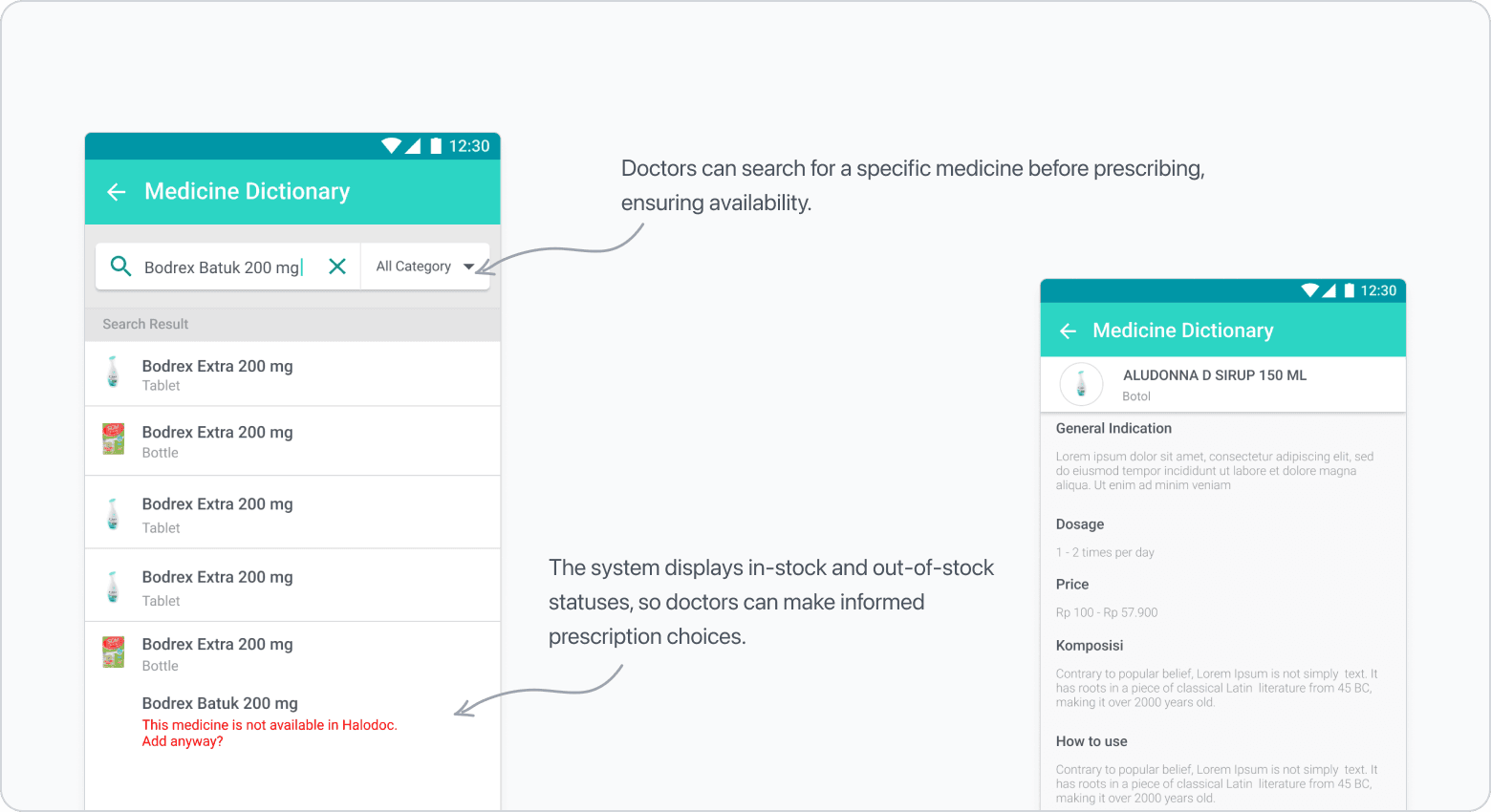
Benefit: Improves efficiency in diagnosis and decision-making, leading to faster and more accurate prescriptions.
Templated replies for faster consultation
Doctors often had to type the same guidance repeatedly during busy consultation hours. We introduced editable response templates for greetings, medication instructions, and follow-ups. Reusable replies reduced repetitive typing while keeping consultation communication clear and personal. This helped doctors respond faster without making the experience feel robotic.
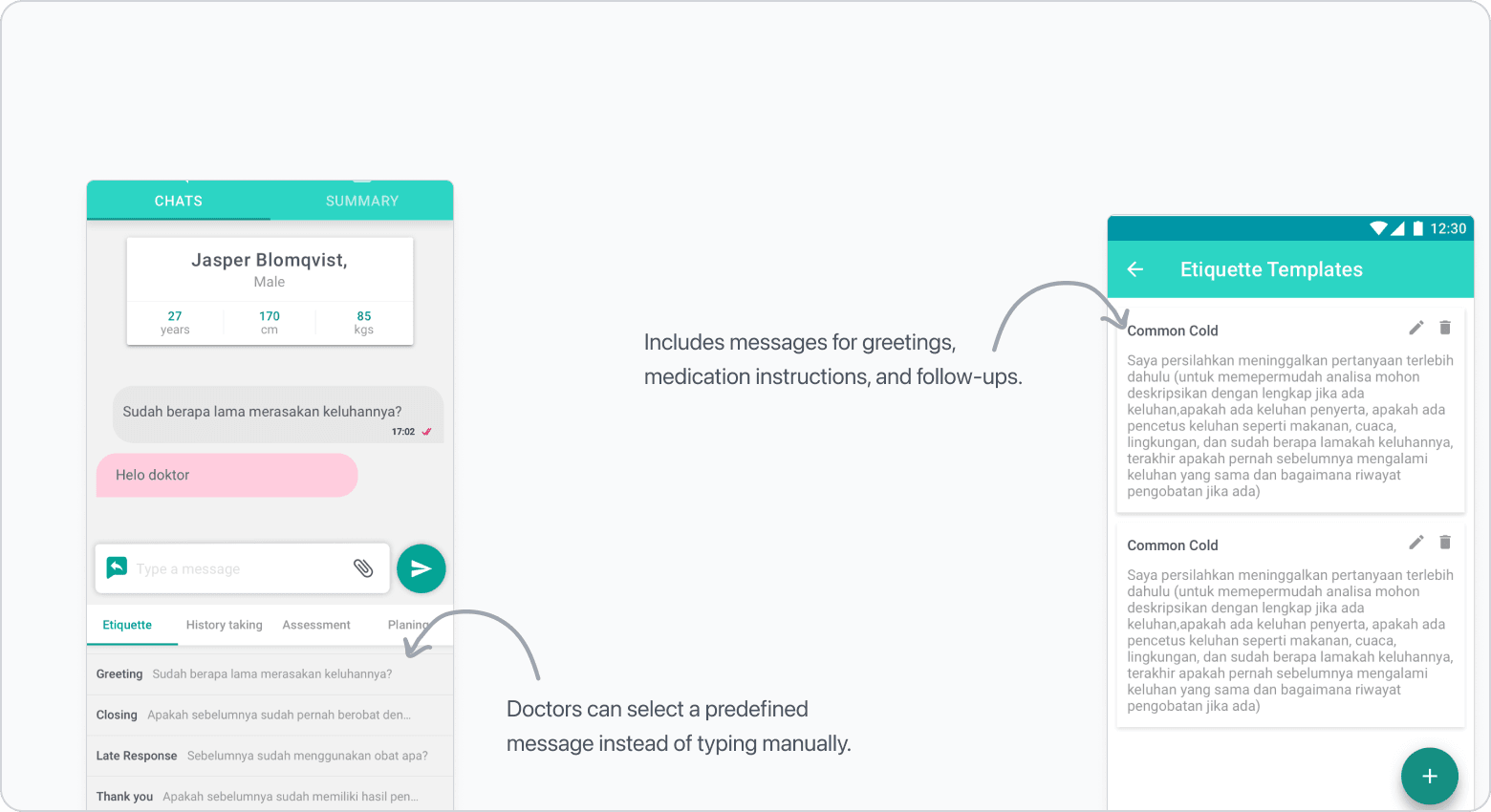
Benefit: Streamlines communication and consistency, reducing consultation time while improving response accuracy.
Patient history
Doctors needed quick access to previous consultations, prescriptions, and diagnoses without leaving the active chat. Patient context needed to stay visible inside the consultation, not buried elsewhere. We introduced a structured patient history view so doctors could understand context faster, make safer decisions, and maintain continuity of care.
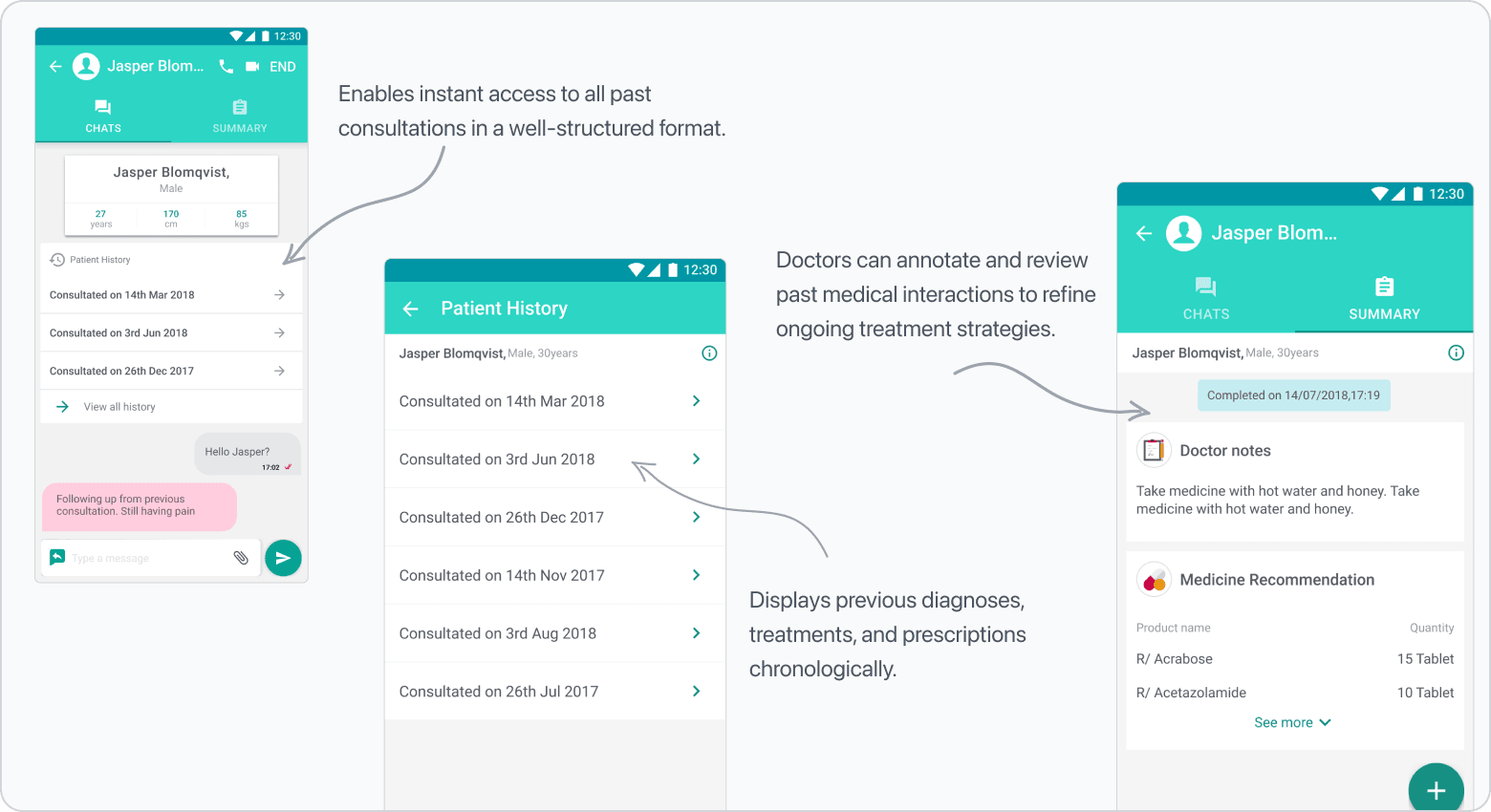
Benefit: Faster, more informed decision-making, improved diagnosis accuracy, and shorter consultation times, enhancing the overall patient experience.
Doctor follow-up and referrals
Continuity of care can easily break after a consultation ends. We designed follow-up scheduling and specialist referral flows. Follow-up flows helped doctors keep care moving after the consultation ended. Doctors could guide patients toward the right next step, especially when symptoms needed monitoring or specialist support.
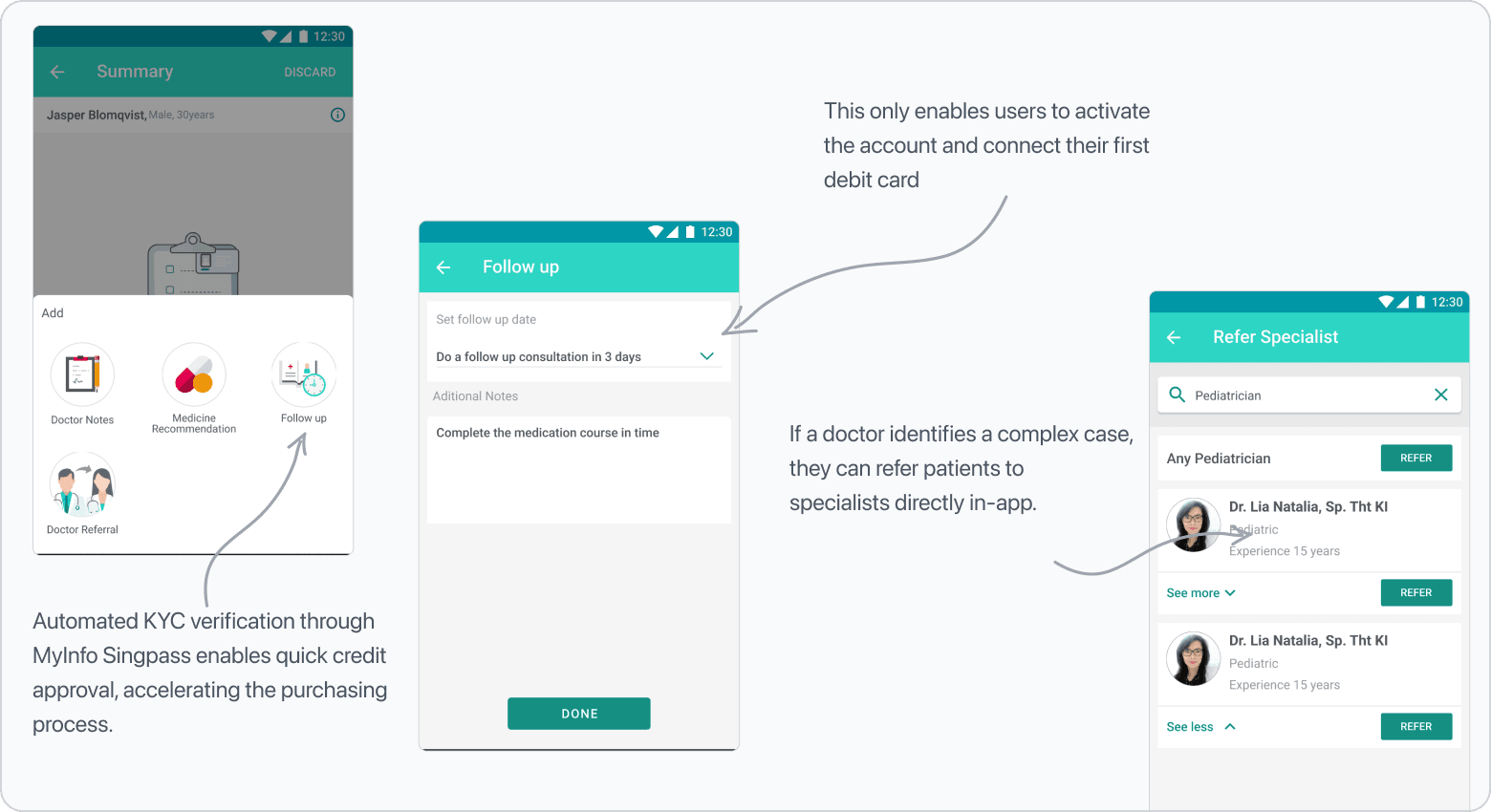
Benefit: Higher patient retention, improved treatment follow-through, and seamless specialist collaboration, enhancing long-term healthcare outcomes.
Graphic content blocker
Doctors sometimes received sensitive or inappropriate images during consultations. We introduced an image filter that blurred flagged content by default. Safety controls gave doctors choice before viewing sensitive consultation images. Doctors could decide whether to view the image, helping them feel safer during patient interactions.
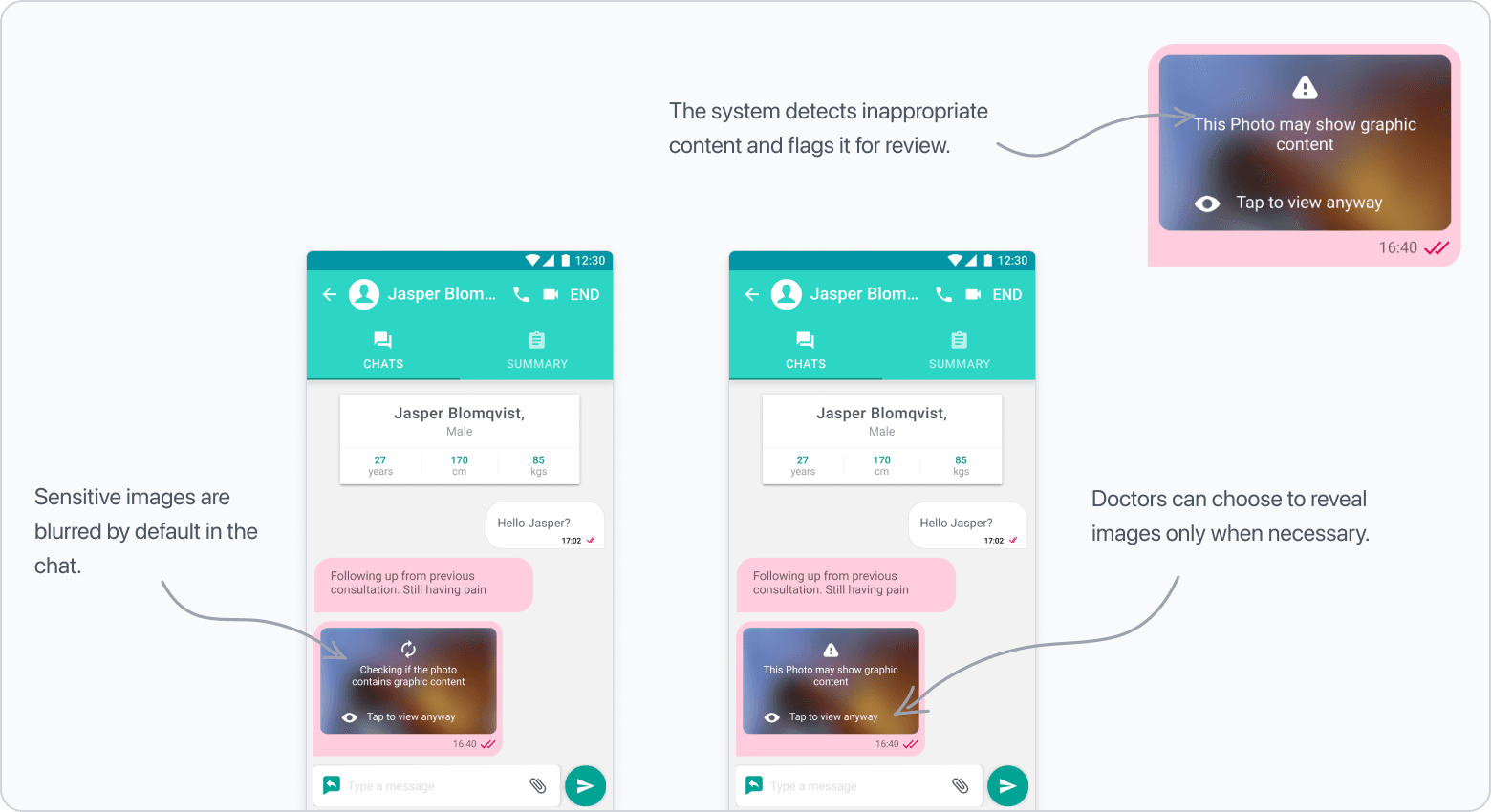
Benefit: Enhanced privacy and safety for doctors, particularly female doctors, ensuring a secure and professional consultation experience.
Outcomes
Streamlined workflows reduced consultation delays and improved prescription handling for doctors.
46%
Reduction in consultation delays
A streamlined workflow helped doctors respond faster and manage consultations more efficiently.
30%
Faster consultation handling
Improved information access reduced time spent switching between steps.
60%
Better prescription flow
Simplified prescription actions helped doctors complete consultation tasks faster.
40%
Improved follow-up completion
Clearer follow-up workflows helped doctors manage post-consultation actions more effectively.
Learnings
Healthcare tools must support real-time decisions, not add operational noise.

Context matters during consultation
Doctors need patient details, history, and actions available at the right moment.
Reduce switching between tasks
Connected workflows helped reduce cognitive load and improved consultation speed.
Design for real-time pressure
Doctor workflows need to be fast, reliable, and easy to use during active patient care.